
Consumer goods firms and auto companies are witnessing an upturn in rural demand, which had been lagging for most of FY24. Expectations of a bumper rabi crop harvest have helped turn the tide. The Reserve Bank of India's (RBI's) Monetary Policy Committee kept the repo rate unchanged last week, noting that as rural demand catches up, consumption is expected to support economic growth in 2024-25.

Fast-moving consumer goods (FMCG) companies anticipate sustained volume pressures in the January-March quarter (Q4) coupled with sluggish rural growth during the period. Brokerages estimate top-line growth to be in low single digits in the quarter. Also, the late onset of winter had an impact on demand for winter products which range from moisturisers to hot beverages.
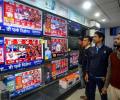
Consumers may have to shell out more to buy television panels as manufacturers say they may raise prices again in April. The industry has been facing this issue of price rise post the pandemic and open cell prices have gone up by around 30 per cent in the last one year. And, television panel manufacturers expect this trend to continue.

Furniture retailer Ikea India on Thursday said it will shut down its store in Mumbai's R City Mall by the middle of this year and explore omnichannel formats in the city. The store at R City Mall, which is spread across 72,000 sq ft, opened in June 2022 to test the viability of small-format stores. The company's plan to shut down the store illustrates the concerns surrounding the viability of running a small-format store, given the rising rentals.
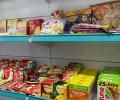
'In staples, we have still managed in rural areas.'

In India, fast-moving consumer goods (FMCG) majors continue to hold sway, with incumbent brands cornering 65 per cent of the market share, shows a Bain & Company report. While identifying the continued preference of Indians for incumbent brands, the report says that the dominance of general trade in the country has allowed national brands to maintain their supremacy. The low penetration of e-commerce in the country has also helped large brands.

'On the final product, there can be an increase of a minimum of 10 per cent in February and March.'

'Will make sure that we create value. We will again look for organic and inorganic opportunities.'

As Ayodhya readies itself for the glittering, much-awaited consecration ceremony of the Ram Mandir on January 22, and as millions of pilgrims and devotees pour into the holy city for the momentous event, companies are rushing to do their bit and be a part of the mega celebrations. Some are offering a part of their profits as donations, telcos are beefing up the number of cellular towers to ensure better connectivity, and there are those distributing jalebis and food platters.

Retail companies are expected to witness a tepid strong same-store sales growth (SSSG) expansion in the third quarter (October - December) of the current financial year (Q3FY24) on the back of subdued sales in the festival season. The third quarter of the financial year typically witnesses higher sales since it coincides with the festival season. This time around, weak customer sentiment has dragged down SSSG.

'Due to rural stress, volumes continue to remain an issue for the industry, and we are yet to see any revival in demand.'
Companies manufacturing fast-moving consumer goods (FMCG) continue to see rural stress sustain and it continues to trail urban demand. At the Confederation of Indian Industry's FMCG summit, managements of various companies pointed out urban demand continued to grow while rural demand remained under pressure because incomes were under stress in rural areas. "Due to rural stress, volumes continue to remain an issue for the industry and we are yet to see any revival in demand," Sudhir Sitapati, managing director (MD) and chief executive officer (CEO) at Godrej Consumer Products

Godrej Consumer Products has launched a new brand of liquid detergent Godrej fab in South India, four decades after introducing Godrej Ezee, the country's first specialised liquid detergent tailored for winter wear and woollens, in 1983. The Mumbai-based company decided to launch another brand of liquid detergent despite having Godrej Genteel liquid detergent.

Hindustan Unilever (HUL)'s decision to split its beauty and personal care division and place a renewed focus on digital has been driven by its aim to serve the consumer of tomorrow, say analysts and brand experts. HUL managing director and chief executive officer Rohit Jawa is looking to make the company 'future ready', and while these bets are not for the short-term, they will eventually pay off as the Indian consumer is young and digital friendly, they add. "Rohit Jawa comes with digital experience and he is preparing to steer HUL into serving the future consumer who is more digital friendly," said Sachin Bobade, vice-president at brokerage firm Dolat Capital.

Consumer durables retailers and manufacturers may end up bearing the cost of the Reserve Bank of India's (RBI's) tightening on easy personal loans, as their margins are expected to be impacted by higher borrowing costs. During the recently passed festival season, consumer durables companies started offering longer tenure loans, zero down payments, and zero interest on a wider assortment of products than ever before, making the products more affordable. While 18- and 24-month easy monthly instalment (EMI) options were available earlier, companies offered them only on select products; now, they are being extended to a larger section of products.

In a move towards gender inclusion, Tamil Nadu has partnered Godrej Consumer Products (GCPL) to offer a 5 per cent job reservation for LGBTQAI+ and people with disabilities at GCPL's upcoming fast-moving consumer goods manufacturing unit in Thiruporur in Chengalpattu district. According to industry experts and activists, while companies acknowledge transgender communities, this is the first time the entire spectrum of gender minorities, including lesbian, gay, bisexual, transgender, queer/questioning (one's sexual or gender identity), asexual and intersex, is receiving such a notable share of job participation in the private sector while signing memoranda of understanding with states.
The supply chain for fast-moving consumer goods (FMCG) companies is seeing congestion due to persistently low demand. This has led to an increase in inventory days, with stocks accumulating at distributors and compelling them to extend higher credit periods to retailers. Distributors, Business Standard spoke to, revealed that demand inventory days have more than doubled in some cases, forcing them to offer credit terms as long as 45 days to retailers, as consumer offtake continues to face pressure.

Consumer durables firms and fashion retailers expect double-digit growth in value terms in the ongoing festival season as consumers have stepped up purchases during this period. They expect to see value sales growth upwards of 15 per cent, which is especially coming in from cities. However, volume growth may lag behind value growth.
Fast moving consumer goods (FMCG) companies are expected to see muted topline growth, with uneven spread of the monsoon impacting demand. Rural demand recovery, too, remains elusive in the July-September quarter. Brokerages expect volumes to remain steady in the quarter on a sequential basis.

Sales of fast-moving consumer goods (FMCG) witnessed significant recovery in September after enduring a double-digit decline in August, according to data furnished by Bizom. Kirana stores in rural areas stocked up in preparation for the festival season, which began in September. This, combined with rainfall reaching 113 per cent of the long-perid average for the month, contributed to a boost in sales.
 © 2025 Rediff.com - Investor Information - Advertise with us - Disclaimer - Privacy Policy - Sitemap - Feedback - About us - Terms of use - Grievances